I think we've both been waiting for some really exciting things to happen to us so that people might want to read our blog. And here we are...2 months later :) And on the one hand, yes, we survived our first year of seminary! Thank you, thank you! And yet, it is a month beginning with the letter "J" and when it is one of these "J" months, we have what is called fittingly called, "J-Term". In order to stay on track with a three-year program (and if we don't, then well...we'll be here for-e-ver [think Sandlot]), we must take 5 classes per semester. In order to accomplish this and stay sane...and by sane, I mean gainfully employed, sanitary and fed, we usually take a "J Term".
This "J Term", Noel is taking Hebrew Exegesis which is a fancy way of saying translating several passages of the Old Testament, the whole book of Jonah, learning more syntax than she ever wanted to know and getting all sorts of fodder for hip sermons on the OT. It's fun! She thought she wasn't going to be able to venture on this little project with the same professor and teacher whom she previously ventured through Hebrew II with, but God aligned things marvelously (as He's wont to do) and so there she is. Every morning for two weeks, you can find her studying Hebrew or chatting nonchalantly with her Hebrew buddy, Ben. The prof told us not to sit by each other, but secretly I think we're his favorites :) Lift up Noel that her memory may prove vast and capable in the area of Hebrew and that it would stick and that God's Truth would be deepened in her gut as a result of her study of the Old Testament in Hebrew. (She's thankful for already learning some interesting tidbits!)
"J Term" holds Evangelism and Church Planting for Greg. He has been reading a few books in order to prepare book reports due prior to his class which starts next Monday. None of these books, as of yet, have been all that great and would probably appear mundane and uninsightful to most of you, so we will not recommend them here. We are both hoping for his sake that the reading material improves and becomes less formulaic (and for Noel, too, because she has to take it sometime in the next year). A good book on evangelism and church planting is hard to find, so it seems. Chatting with a friend the other night, we thought that perhaps this class needs some good missional church, how-to-church-plant-and-be-missional kinds of books. Ironically, we are feeling quite a lack in the "How To" area in most of our classes. Like, where there's a will and a theology, there must be a way, right??? Well, we believe so...or else what kind of theology is it, really? Anyway, that's a different soap box for a different day. If any of you have any suggestions on good church planting or missional church books, please let us know!
And pray for Greg as he is in class all day every day next week that he would learn what it is that God has for him.
When not in "J Terms" ie most of the summer, we can be found at our various jobs. Greg is still at Starbucks, though he was just relocated...AGAIN. But, it's all good. He's at a slow, giant cafe store now that is a great hang out and lets him engage with customers as he likes to do (which Noel doesn't understand at all :) ).
Noel is a manager at an outdoor pool in Midland, about 35 minutes northwest of where they live. Thus far it's been both a challenge and fun. Last week, she had a good conversation with Grandpa Jim, as she calls him, about the woes of western PA and the seeming epidemic of very young moms (and dads). More on that later, but it's people like Jim that make Noel's days out in the sun, yelling at kids and saving lives all worth it....well, that and the wicked tan she's getting! Just kidding, pray that the both of us would live the joy of the Lord at work and would be lights in dark places.
Thanks for reading, Pfiles. We regret that we will not be traveling anywhere much this summer and so will not get to see many of you. But, please do come see us if you're over our way! And let us know if we can be lifting you up as well. We wouldn't have made it through our 1000th day of marriage and our first year of seminary without your love and prayers...fo' real, we mean that.
Showing posts with label schoolwork. Show all posts
Showing posts with label schoolwork. Show all posts
Thursday, June 9, 2011


Tuesday, February 8, 2011
where you'll find us
So, we're now into our third week of classes or so and we thought you might like to know about our classes for this semester. Classes do occupy about oh, let's see 75% of our time and about 98% of our mental energy (the rest given to things like studying Whedon's "Firefly" and how to get to the next age in Myst III). But, we're having a good time and though this semester is much more of a doozie than last semester, we have a lot of fun things we're learning, researching and writing on.
Plus, we thought in case anyone calls or wants to get in touch with us, you can see where we're at and why we're not answering! Though, this of course, does not include sleeping, working, etc. We also have morning and evening prayer and are required to attend the one prior or after if we are on campus for class. It's great. Noel just officiated for the first time last week and did well, she even found a cassock about the right length and she didn't trip once!
Plus, we thought in case anyone calls or wants to get in touch with us, you can see where we're at and why we're not answering! Though, this of course, does not include sleeping, working, etc. We also have morning and evening prayer and are required to attend the one prior or after if we are on campus for class. It's great. Noel just officiated for the first time last week and did well, she even found a cassock about the right length and she didn't trip once!
Greg's days
Monday morning: Pastoral Leadership -pastoral care and servant leadership
Monday morning: Pastoral Leadership -pastoral care and servant leadership
*he almost always works from 2-10:30 pm on this day
Tuesday afternoon: Christian Ethics - all things methodological and Biblical re: Ethics and morality
Thursday morning: Medieval and Reformation Church History (lovingly dubbed "Mr. Church") - fabulous class on the church both on "the continent" and in Britain from about 500-1650ish
Thursday afternoon: The Gospels - that is, Matthew, Mark, Luke and John
Noel's days
Monday evening: Hebrew - learning Hebrew, quiz every week, learn at least 10 new words per class, very difficult
Tuesday afternoon: Christian Ethics - Read Hays "Moral Vision of the NT", it's great
Thursday morning: MR. Church
Thursday afternoon: The Gospels - learning the whole book of John for a final exam? priceless.
Hope your days go well also. Greg works at least 3 8-hr shifts a week, some combo of M-W-F-Sat/Sun. Noel is doing odd jobs as they are presented to her. Please pray for Greg as he is sleeping (at noon) while I publish this blog as he now has the cold that I had last week and is quite under the weather. Thanks, dear 'pfiles!
Monday, January 24, 2011
some more incomplete works
On a personal note: Noel dedicates this "essay", an assignment for Early Church History, to write an article, as for a church newsletter, on the practical implications of the doctrine of the Trinity, to the good people of Holy Trinity Anglican in San Antonio, TX (not least of which to her parents who dubbed it thusly). Thank you for worshiping God as He reveals Himself; as the loving Trinity. Noel is very excited to worship with you one day soon.

Greetings, church! As we approach Holy
Trinity Sunday, let us imagine together our ordinary days profoundly
lived in the light of the One God: Father, Son and Holy Spirit whom
we worship. What do you imgine when I say that? Do you think of an
apple? Water? A flame? While these analogies can be helpful in
certain matters, what I want to address here will glean little help
from them lest, as Gregory of Nazianzus says, “we be
frenzy-stricken for prying into the mysteries of God” (Guy, 280).
So, let us proceed in humility. Because we take God at His word that
He has revealed Himself as Trinity that this should have an impact on
our daily lives. But, perhaps, we might ask, I know we affirm, pray
and worship the Trinitarian God on Sunday morning and in morning and
evening prayer, but I’m still fuzzy on the details, can you fill
them in? I hope St. Augustine might be of some help to us on this.
He says,
“has redeemed us through His own blood, giving His soul for our souls,
His flesh for our flesh, and has also poured out the Spirit of the Father
for the union and communion of God and humanity, imparting indeed
God to human beings by the Spirit, and on the other hand, attaching
humanity to God by His incarnation, and bestowing upon us at His
coming immortality durably and truly, by means of communion with God.”
This is a good synopsis of God’s
working out of our salvation in the life, death and resurrection of
Jesus as well as through the indwelling of the Spirit. What do we
see that can help us in our daily living? How does this effect how I
go to work tomorrow or hang out with my kids tonight?
Well, first of all, we can trust in
the mediation of Christ that Augustine spoke of, both His mediation
of Himself to us and of our humanity into the life of God. Isn’t
that amazing? That sends shivers down my spine to think that God did
that! We receive this mediation through the Spirit, moment by
moment. And friends, where the Spirit of the Lord is, there is
freedom! 2 Corinthians 3 goes on to say that in this freedom, we
reflect the Lord’s glory and are being transformed into Christ’s
likeness by the Holy Spirit. And He is with us always as Christians.
So, engage Him at all times of day with confidence, ask Him to join
you to Christ’s likeness and to live into those good works He has
for you. Ask Him to help you really love and care for Jim in the
cubicle next to you whom you are sure has a fingernail growth
condition for as often as you hear his clippers being used! Be
assured that the triune God is working in your workplace, at your
home, in your grocery store, at the post office and He invites you to
participate with Him as a minister of reconciliation in the world.
So, repent for those times you have been unwilling to participate and
ask Him to help you understand Him more and to help you be more like
Him.
Another means of practicing our
Trinitarian faith is through remembrance. Friends, we as Anglicans,
stand in a long tradition of those who have chosen to remember and
celebrate God’s events in history. You might notice that much of
our liturgy involves this recollection with gratitude, nowhere noted
more than in the Great Thanksgiving, Eucharist. By remembering the
salvation trajectory, we can know Father, Son and Holy Spirit for
willing together to sustain the creation even after sin entered, for
destroying the power of sin and death, and restoring us to new life
in communion with God, as Augustine said. In all things, thank God
for the ways in which He does these things in your life now, recall
them with others, use them to tell others the Good News. Even ask
the Spirit to help bring these things to mind as part of practicing
this Trinitarian way of living.
Last but certainly not least is that
our Trinitarian God is within Himself love and relationship. The
source of all our love, ability and yearning to relate is in Him. He
is known in relationship and it is for life in Him that we are saved.
When Jesus prays, that they may be one even as we are one, I in them
and you in me that they may become perfectly one, so that the world
may know you sent me and loved them even as you loved me,” He is
not just saying something nice and comforting. He is expressing the
reality that the triune God desires for us, that the Church be
Christ’s body, one with Him and the Father. After Jesus ascends,
He sends the Spirit of Truth to work in those whom He loves the
reality of unity that is the same unity between the Father and the
Son. How do we know this? Because the Spirit is also one with the
Father and Son as God! So, we are, in a profoundly real way, being
bound together in love as members of Christ’s body, the same love
that is found in the Trinitarian God of the Universe. So, love in
freedom! Practice our Trinitarian faith with risky love through
hospitality, gift-giving, gift-receiving, prayer for one another,
asking the Spirit to help you see others needs and a way to help,
carrying others burdens, befriending the lonely, and all of those
things that Jesus did in the Gospels in the power of the Spirit. We
are living into our call as the royal priesthood when we welcome
others into loving relationship just as we were welcomed into the
loving relationship of the Triune God by the mediation of Christ
worked out in us by the Spirit.

We will explore more of these themes
and perhaps imagine a few more as we explore the vastness of the
doctrine of the Trinity in our Christian Ed series beginning in
Pentecost. All of this here has been just a tantalizing morsel of
what is to come and at the least you’ll learn some new cool words
to impress friends and family! We will meet together in the hope that
“we, being rooted and established in love, may have power, together
with all the saints, to grasp how wide and long and high and deep is
the love of Christ, and to know this love that surpasses
knowledge—that we may be filled to the measure of all the fullness
of God: Father, Son, and Holy Spirit.”
Saturday, January 8, 2011
some Noel works

Noel Collins Pfeifer, Reviewer
Making Room: Recovering the
tradition of Christian Hospitality
by Christine Pohl
by Christine Pohl
Pohl begins with a
historical excavation into the ancient Christian tradition of
hospitality and finds it to be a quintessential part of the Church’s
identity. The material is well-researched and well-presented. She
gleans strength from her treatment of Scripture, tradition, reasoning
a plausible re-shaping of it in contemporary culture and being shaped
by the experience of historical and present day hospitality
ministers. Pohl writes of hospitality as a deeply Biblical practice
that God even forged into the Covenant with Israel through their
“identity as aliens and related responsibility to sojourners and
strangers.” (27) They even saw it as a place of sacramental
meeting with God. Pohl is also critical of many aspects of today’s
particularly Western context that have and may continue to impede
hospitable churches and homes. These include fear, busyness, loss of
a sense of Church as family and the valuing of individualism.
However, Pohl has not lost hope and continues to explore the
possibility of reconstituting hospitable attitudes and practice with
the help of God and the wisdom of those who have previously taken up
the mantle. No conversation on hospitality would be complete without
defining “stranger”, the art of welcoming, the dignity of
persons, the power of recognition, communal meals, multiple Church or
family co-operation, and the importance of laughter. She also
outlines many of the challenges inherent to this ministry and those
nitty, gritty, honest fears and questions that may very well keep
people from ever even attempting hospitality. Pohl does not pull
punches or minimize the loss of this hallmarking tradition, but it is
clear that she believes in an educational-conversational approach
rather than simply making Christians feel guilty about it. She
speaks as a prophet in, for and to the Church. Overall, it is a
vastly helpful book for those who recognize that our society is truly
yearning for belonging, and that the Church is in a unique position
to offer genuine belonging and love through open hearts and open
doors. It is a highly accessible read, enabling to the hospitable of
heart and exhortative to those who are not gifted but consider
hospitality a valuable tradition to be resuscitated in the Church.
For further practical help, she includes some brief information from
existing hospitality ministries worldwide and an extensive
bibliography. Making Room is an important asset to this
Biblical discipline’s rediscovery and incorporation, which Pohl
would say, and I would agree, is paramount to the proclamation of the
Gospel and the symbol of our eschatological hope of feasting together
at the wedding banquet of the Lamb.
Monday, December 27, 2010
more incomplete works of greg
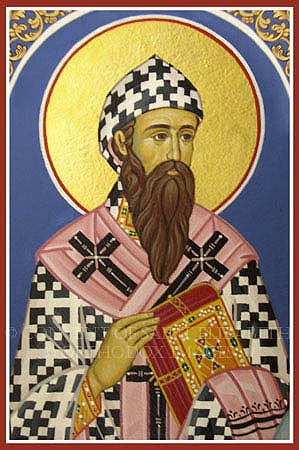
An essay prepared for the last section on Early Church History
In
his Third Epistle to Nestorius, Cyril of Alexandria argues against
the writings and teachings of Nestorius concerning the nature of the
person of Christ. Nestorius has propagated a Christology which drew
a great distinction between the humanity of Christ and the divinity
of Christ, the Eternal Word. Nestorius had been concerned about
Apollonarianism and the claims that the humanity of Christ was
subsumed by his divinity. Attempting to realign that error, and to
protect the divinity of Christ which clearly could not change, suffer
or die, Nestorius ended up splitting the two natures of Christ
dividing Christ's words and acts between his humanity and divinity,
respectively. Cyril's approach to argue against Nestorian
Christology relies on a three-fold system of “rules” used in
early ecumenical counsels for reaching theological decisions: Do not
contradict Scripture; Do not threaten the means of salvation through
Christ; And do not interfere with the liturgy.
Cyril
regularly appeals to Scripture in order to disprove Nestorius showing
him how he has misused Scripture and departed from the correct
interpretation thereof. Cyril urges Nestorius to “abstain from
these mischievous and distorted dogmas, which you hold arid teach,
and to receive the right faith, handed down to the churches from the
beginning through the holy Apostles and Evangelists, who 'were
eye-witnesses, and ministers of the Word'” (Third
Epistle to Nestorius,
1). It is evident that there is an essential connection between
Scripture and the faithful interpretation of Scripture as passed down
through tradition, or “right faith”. Cyril also quotes and
references Scripture in order to build up his case for the unity of
the two natures of Christ and the necessity that He be both fully God
and fully human in all his words and actions.
Cyril
appeals to the second of the unofficial “rules”, when he argues
that Nestorius is threatening salvation through Christ. It is
necessary for salvation that the Eternal Word died on the cross in
unity with Jesus' humanity, “in order that, having trodden down
death by his unspeakable power, first in his own flesh...and that he
might make a way for the nature of man to attain incorruption”
(Third
Ep, 3).
Lastly,
Cyril protects the liturgy, specifically the sacrament of the
Eucharist, from the Christology of Nestorius. Cyril argues that
Nestorius has divided Christ into two, separating the humanity and
divinity in such a way that he cannot be rightly worshiped in Unity,
but is rather two different objects of worship where believers must
somehow render praise to Jesus the man as well as Christ the God.
Cyril uses the practice of the Eucharist to uphold the indivisible
union of the two natures of Christ in one person. If the person of
Christ is divided, then he is not present in the Eucharist and those
who partake of it do not partake in the life-giving Word who died.
This argument asks the question, “was not the Eucharist a
re-enactment of the miracle of Bethlehem, at which the life-giving
Body and Blood of Christ were offered to be received by the
faithful?” (Chadwick,
198).
This
process carries validity to how we may do theology today, but the
diversity of Orthodox Christian practice may cause difficulties to
use this approach with consistency. To uphold Scripture as paramount
and to defend salvation through Christ are certainly necessary and
Christianity remains in agreement on these points. Arguing from
liturgy provides more difficulties, especially with perennial debates
concerning the nature of the Eucharist, or Lord's Supper and Baptism.
A more robust theology of liturgy across all Christian denominations
would enliven theological debate, especially since lex
orandi lex credendi
is alive and well in the 21st
century.
incomplete works of greg
So, since we mention the "work" we do, but you only actually ever see swanky pictures of our social lives and crutches to get us through a harrowing seminary experience, we thought we'd show you some of the fruits of our labors. It is sort of difficult to post large papers or things that would require a lot of context but we have done our best to post what is most accessible and brief. :)
One of our classes was Biblical Interpretation/Intro to English/Greek/Hebrew grammar and our final project was to read a book called "Drama of Scripture", basically an overview of salvation history which unfolds in 6 "Acts" (plus an Intertestamental period). Using this format, we were to develop a teaching program on these 6 acts taught through whatever medium we preferred so it was a creative opportunity for us.
Greg chose to use the German national anthem to set a hymn based on the six acts from the drama book.

One of our classes was Biblical Interpretation/Intro to English/Greek/Hebrew grammar and our final project was to read a book called "Drama of Scripture", basically an overview of salvation history which unfolds in 6 "Acts" (plus an Intertestamental period). Using this format, we were to develop a teaching program on these 6 acts taught through whatever medium we preferred so it was a creative opportunity for us.
Greg chose to use the German national anthem to set a hymn based on the six acts from the drama book.

“The Drama of Scripture”
words by Gregory Pfeifer,
2010
music by Franz Josef
Haydn, “Austria” 1797
http://www.digitalhymnal.org/dhymn.cfm?hymnNumber=423
for Hymn Tune
1-Creation
God
created out of nothing
All
things by His spo-ken Word:
Light
and life in heav'n, earth, sky, and sea.
God
called all He made ve-ry good!
Making
ma-n in His own im-ag-e,
God
spoke His first co-ve-nant,
“Be
ye fruit-ful! Mul-ti-ply and fill!
Have
do-min-ion o-ver all I have giv'n!”
2-Fall
of Humankind
God
gave only one com-mand-ment:
“Eat
from this tree and ye shall die.”
They,
forgetting God and choo-sing self
dis-o-beyed
and foll-owed a lie.
Man's
re-la-tion-ship with God was bro-ken
yet
He still would pro-mis-eth:
“From
the woman's seed shall come vic-tor-y
He
sha-ll crush the head of sin a-nd death!”
3-
Kingdom Established in Israel
Is-ra-el,
God's cho-sen kingdom
blessed
to bless the sons of man.
Out
of bon-dage through the wild-er-ness
God
led them to the Pro-mised Land.
Gave
them kings and priests, judges, prophets, Law
through
whom co-ve- nants un-furled.
“I
will be your God. You, my people.
From
you will come the King who will save the world”
4-Redemption
Accomplished by Jesus
Jesus
Christ ful- filled the Co-ve-nants
wri-ting
Law and Bless-ing with-in.
Second
Adam, Hope of Is-ra-el
Conq'ring
King o'er death a-nd sin!
The
In-car-nate Word lived and dies for us
rose
a-gain to reign on High
“God
so loved the world: He gave His own Son
Who-e'er
be-lieves in Him shall have Ne-w Life”
5-The
Church and Jesus' Mission on Earth
God
the Fa-ther sends Sal-va-tion forth.
God
the Son se- cures Re-demp-tion.
God
the Spi-rit leads the Church in Truth
who
Par-ti-ci- pates in His Work.
Ci-ty
on a hill. Light to Nations fill.
Com-mis-sioned
by Christ our King:
“Go
into the world make di-sci-ples
by
Fa-ther, Son, and Holy Ghost bap-tiz-ing!”
6-Return
of the King
Wai-ting
for the King to come a-gain
long-ing
for new earth and new heav'n.
All
things shall be once for all re-deemed
through
the judg-ment of the Lamb.
Part
of one Story from Fall to Glory
Jesus
comes to write the End,
“Lo!
I'm coming soon!” we say when you do,
“Ma-ra-na-tha
come Lord Je-sus! Amen!”
This
Hymn is designed to support a 6-part teaching program, each verse
coinciding with the content of the teaching to introduce the Parish
to the “Drama of Scripture” as a way of situating the narrative
of the Bible in its own context as well as our own context in the
unfolding Story. The hymn tune was chosen as a familiar one, often
associated with “Glorious Things of Thee are Spoken” (1982
Hymnal, Hymn #522), which is a Hymn concerning the Church. The
familiarity with the tune, also used as the music for the German
National Anthem, “Deutschlandlied”, allows for ease of teaching
the new text. Similarly the familiar tune turns the focus away from
learning the music to paying attention to the lyrics. Though
pedagogical in nature, this Hymn, as with all others, ought to
inspire to worship. To help facilitate this worshipful experience,
the lyrics attempt to draw the singer out of self and upward to the
Lord by emphasizing God's work. The hymn tune has
three sections per verse. The first section introduces God's
activity, the middle section briefly relates the impact of the
activity and each verse concludes with God speaking words of covenant
exhortation, except for the last verse where the Church responds to
the final words of Christ as we now await His return, reminding us
that we are within the time frame of that verse and the chapter of
the “Drama” we find ourselves.
Sunday, October 24, 2010
We thought it was like "Fall Break"...


But, as we perused our syllabi and all our due dates, we gradually realized that it was nothing like a Fall Break and that we would be unable to go visit people or Niagara Falls or even just experience what the bourgeoisie refer to as a "staycation". Alas, this was not our lot in life.
First and foremost in our minds was our four Early Church essays and quiz to be turned in and taken by Thursday. The class is excellent and the questions fair, and the essays only a page. Easy shapeasy, right? Have you ever tried to write all your thoughts about Ignatius of Antioch's historical context on a single 12-point font, 1 inch margin page? I didn't think so. Sadly, it was fairly easy to fit the place of women in the early church on one page...and that was even with the added business of having to support your claim with reference to the Didache.

We thought about posting all of our assignments for your perusal, but we will pick and choose because we don't want any pfeiferphiles to become pfeiferfoes. Pictured above is Greg, chagrining as he attempts to put his finished essays in the dropbox online only to find that the internet has gone out...again. More on that little problem later.
By the by, Greg highly recommends The Change of Conversion and the Origin of Christendom by Alan Kreider. It it a fairly small book, with ridiculously small font, but which packs a lot of information on the nature of the church and the changes she underwent as Christianity became the religion of the empire.

And about this time, they recalled the word study due for BI600 (endearingly called this because nobody ever remembers the real name and thus far, it seems strange to have a grammar class in seminary)...and in addition to the Word Study, an Exam on the first half of the class. This means, the entirety of a "little" book called "Greek for the Rest of Us" and all the English and Greek grammar your brain can hold, and some that it can't, for that matter. Pictured to the left are Noel's lifeline, her flashcards and the Greek book sprawled on their dining table in receding light to accentuate the feeling of dread which accompanies them. Please be lifting up the exam which happens Monday, the 25th, and for especially Noel's memory to be entirely alert. Greg had 5 semesters of Greek and is already a grammar guru.
By the by, Greg highly recommends The Change of Conversion and the Origin of Christendom by Alan Kreider. It it a fairly small book, with ridiculously small font, but which packs a lot of information on the nature of the church and the changes she underwent as Christianity became the religion of the empire.
Noel, pictured above, immensely enjoys Early Church, perhaps a little too much. But, she was also pre-disposed to the idea that this would be her favorite class at Seminary. In any case, doesn't she look so studious and intellectual in this picture? If you'd like to see her answer to one of the "essays"-a creative flyer, click here.

And about this time, they recalled the word study due for BI600 (endearingly called this because nobody ever remembers the real name and thus far, it seems strange to have a grammar class in seminary)...and in addition to the Word Study, an Exam on the first half of the class. This means, the entirety of a "little" book called "Greek for the Rest of Us" and all the English and Greek grammar your brain can hold, and some that it can't, for that matter. Pictured to the left are Noel's lifeline, her flashcards and the Greek book sprawled on their dining table in receding light to accentuate the feeling of dread which accompanies them. Please be lifting up the exam which happens Monday, the 25th, and for especially Noel's memory to be entirely alert. Greg had 5 semesters of Greek and is already a grammar guru.
We also have a book review, reflections and our regular reading assignments as well as 22 hours of work each week. So, we're starting to feel the pressure big time.
Are you wondering how on earth we survive all this chaos?
Are you wondering how on earth we survive all this chaos?

Subscribe to:
Posts (Atom)

